Postponed – Renewing the forest with fire?

[Below is what we had planned]

Renewing the forest with fire?

A Newstead 2050 Community Conversation Thursday 10 July, 7pm-8.30pm, Mechanics Institute Hall, Newstead

Join us in July to learn about the different ways that fire is used in the Muckleford Forest, the processes and the outcomes. Looking at three recent planned burns, we’ll invite our panel to talk through the ways in which fire has been used and whether it might help renew the health of the forest.

Panel

  • Karl Just: botanist and zoologist, consultant specialising in flora and fauna surveys and ecological restoration projects
  • Levi Jessen-Fennell: Djaara Djandak Wi team leader involved planning and conducting the Dja Dja Wurrung cultural burns across Djaara Country
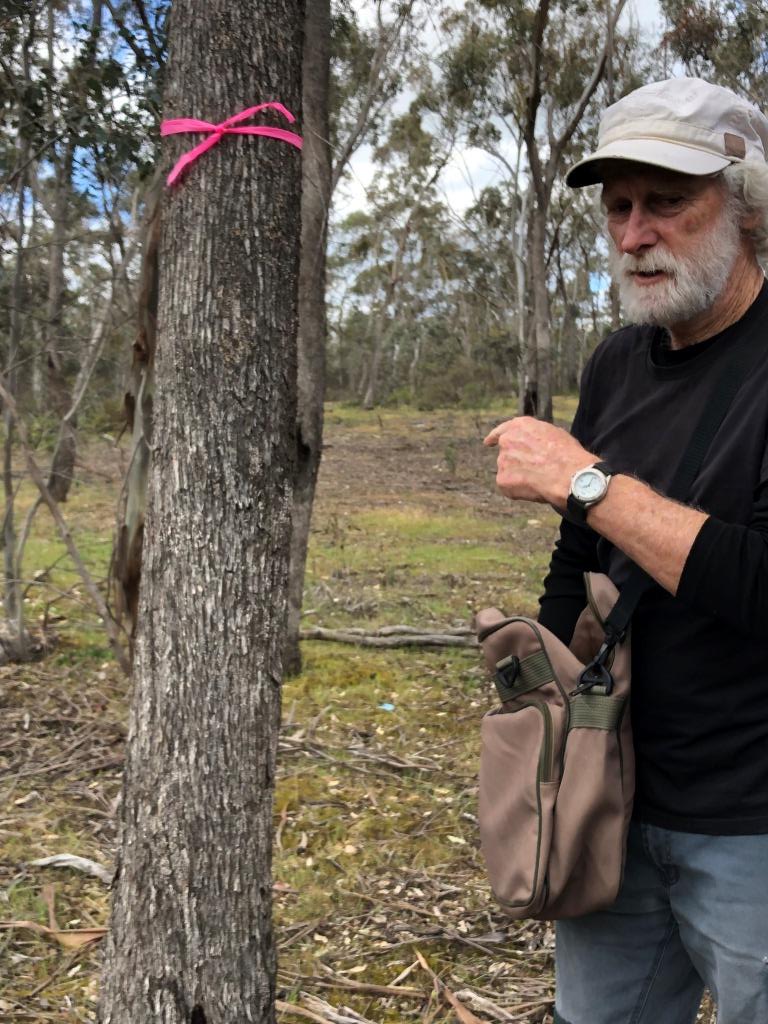
  • Geoff Park: Field naturalist, nature photographer and blogger, creator of the remarkable Natural Newstead blog.

The three recent Muckleford Forest examples are: Djaara Djandak Wi (or cultural burn) on Spring Hill Track just north of Newstead in 2023, and two planned burns conducted by Forest Fire Management Victoria (FFMV) along Bells Lane Track (2024) and in the Maldon Historic Reserve (2025).
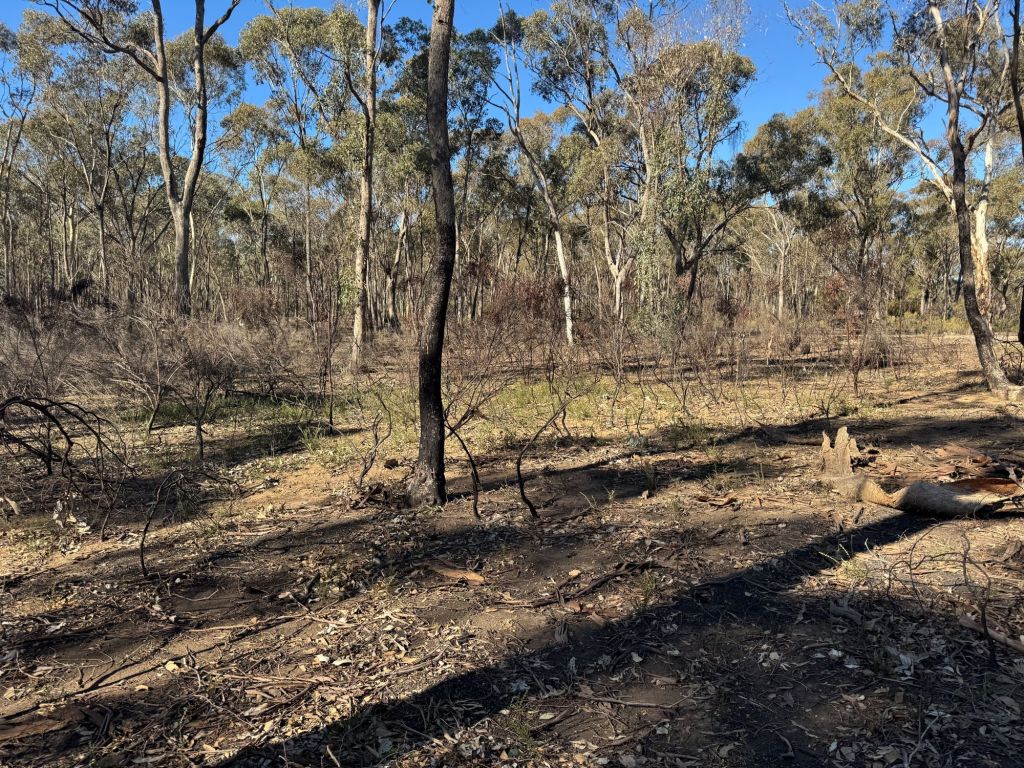
Talking Fire, a project auspiced by Newstead 2050 Inc., is a community initiative designed to create community awareness and understanding about fire in the Box-Ironbark landscape that came out of the 2013 Newstead Community Plan. Talking Fire worked with Dja Dja Wurrung and Forest Fire Management Victoria to find a local area that could be the focus of Djandak Wi (‘Country Fire’) – or cultural burns – to demonstrate how fire might heal and renew Country; the area on Spring Hill Track was selected. To find out more about Talking Fire and previous events, look at the website https://talkingfire.org/.

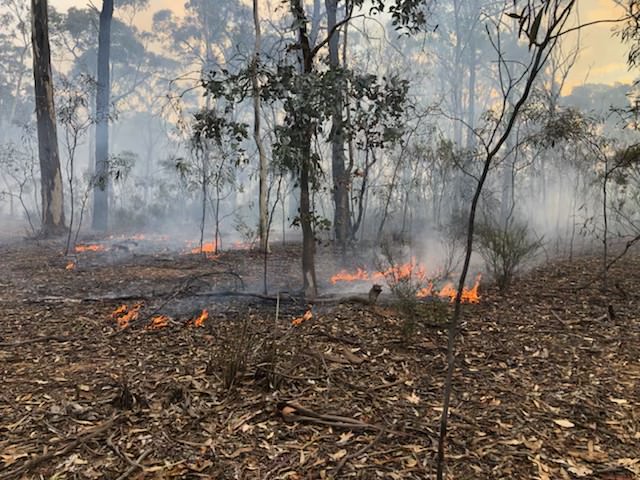
Rethinking planned burns

Kinglake Friends of the Forests, Friends of Box Ironbark Forests, Friends of the Whipstick and the Whroo Goldfields Conservation Network have engaged Dr Zylstra to speak at a public meeting at the Castlemaine Senior Citizens Centre at 7pm on Tuesday 20th August to explain his studies and model of bushfire behaviour. We are hopeful that a greater understanding of fire behaviour will lead to a review of the practice of prescribed burning, greater protection for the flora and fauna of the forests and a reduced risk of bushfires for communities.

Forest Fire Management Victoria (FFMV) plan to burn 10,000 Ha of forest in the Murray -Goldfields districts in the next 2 years. This is despite acknowledgement by the Victorian state department of Environment, Energy and Climate Action, DEECA that “Box-Ironbark forests are considered not prone to recurrent fires, making them possibly atypical of dry, sclerophyllous vegetation in Australia.”

With climate change creating more extreme fires and a longer fire season, governments have ramped up “hazard-reduction” burning. New research however shows the practice can actually make forests more flammable. Over time, some forests tend to thin out and become less likely to burn – hazard reduction burning disrupts this process.

Dr Philip Zylstra is a fire behaviour scientist and Adjunct Associate Professor from Curtin University. In his former work as a remote area fire fighter, he realised that planned burns for fire mitigation were not only causing immediate environmental harm, but could increase fire risk to communities in subsequent years. As many others noted, the bush responded to these burns with a dense flush of understorey growth. As a result, Dr Zylstra undertook Australia’s first detailed and systematic attempt to link the mechanisms that drive fire behaviour in forest environments, developing the only peer-reviewed model to show how forest structure and composition drives fire behaviour in Australian forests.

According to Prof Zylstra:
“The open understorey and historical rarity of bushfires in the Box-ironbark near Whroo are a reminder that some forests are natural advantages for controlling fire. Disturbances such as burning and logging can break down these valuable defences, causing regrowth that drives a pulse of elevated fire risk which can last for decades. The fires in the Pyrenees are a tragic example of this, as the average annual area of bushfires has nearly tripled since widespread logging began in that area. Certainly climate change is a major influence, but it doesn’t let us off the hook. The old modelling which drives the push to disturb forest does not account for the natural controls that undisturbed forests have placed on fire since the days of Gondwana.” (Zylstra, P. 2024, pers. comm., Feb 26)

Shared from FOBIF

Cultural Fire – Save the Date

Trent Nelson is scheduled to speak at the March meeting of the Castlemaine Field Naturalists on the Murray Goldfields Cultural Burn program (Djandak Wi) and talk about the burns in the area of Castlemaine.

Trent is a Dja Dja Wurrung Traditional Owner. He works in the Forest Fire Operations Division, Department
of Energy, Environment and Climate Action.

Date: Friday 8 March – 7.30pm
Where: Fellowship Room, Uniting Church, Lyttleton Street, Castlemaine

More details soon or check out the CFN website: https://castlemainefieldnaturalists.org.au/

[Photo: Trent Nelson, 2016 at a Talking Fire event]

CFN meetings usually start with members’ observations – reports on interesting flora or fauna recorded during the previous month – followed by a talk from a guest speaker. Members and visitors are all welcome to attend.

And for those interested in research on the impacts of fire, here is a link to an article on the impacts of changing fire regimes on hollow-bearing trees in south-eastern Australia.

Strategic Fuel Breaks? Rescheduled to 20 October

Rescheduled due to rain and Muckleford Creek flooding.

DELWP have established an east-west strategic fuel break along Bells Lane Track in the Muckleford Forest. The process involved cutting and mulching for a distance either side of the track, except where the vegetation was judged to be of a high quality or had strong habitat values, particularly in the Conservation Reserve section. Only understorey plants were cut and mulched. DELWP did some pre-work consultation in May 2022 and community members provided their views on sections where cutting and mulching should be minimized.

On Thursday 20 October, there is an opportunity for anyone interested to find out more through:

  • a look at the works done along Bells Lane Track – meet at 11.30am at the eastern end of the track at the corner of Bells Lane Track and Muckleford School Road (45 mins)
  • a presentation by DELWP plus discussion – Newstead Community Centre (Lyons Street, Newstead) – 12.30-2pm

Interested? Just turn up! DELWP contact is Justine M Leahy (DELWP) justine.leahy@delwp.vic.gov.au

(Also posted on the Muckleford Forest blog)

Strategic Fuel Breaks?

DELWP have established an east-west strategic fuel break along Bells Lane Track in the Muckleford Forest. The process involved cutting and mulching for a distance either side of the track, except where the vegetation was judged to be of a high quality or had strong habitat values, particularly in the Conservation Reserve section. Only understorey plants were cut and mulched. DELWP did some pre-work consultation in May 2022 and community members provided their views on sections where cutting and mulching should be minimized.

On Thursday 6 October, there is an opportunity for anyone interested to find out more through:

  • a look at the works done along Bells Lane Track – meet at 11.30am at the eastern end of the track at the corner of Bells Lane Track and Muckleford School Road (45 mins)
  • a presentation by DELWP plus discussion – Newstead Community Centre (Lyons Street, Newstead) – 12.30-2pm

Interested? Just turn up! DELWP contact is Justine M Leahy (DELWP) justine.leahy@delwp.vic.gov.au

(Also posted on the Muckleford Forest blog)

The state of the environment: Cultural burning

The recently released State of the Environment Report has attracted a lot of media attention. This article in The Conversation looks at what the report says in relation to cultural burning and ‘institutional’ bushfire management programs – ‘planned’ or ‘prescribed’ burns.

While the article refers to 25 years of research in the ‘stone country’ of the Arnhem Land Plateau, one of the observations is that ‘once the ecological benefits of cultural burning are lost, they cannot be simply restored with mainstream fire management approaches’ using the cypress pine (Callitris spp.) as a case study.

Arnhem Land, NT. [Photo by Vladimir Haltakov on Unsplash}

One of the differences the article highlights is that ‘institutional fire management’ tends to be large-scale, and ‘based on concepts of efficiency and generality. It is controlled by bureaucracies, and achieved using machines and technologies’. It is an ‘industrial approach’ rather than using ‘place-based’ knowledge and close relationships with Country.

Here is the link to the article: New research in Arnhem Land reveals why institutional fire management is inferior to cultural burning (the full research report is here – https://www.nature.com/articles/s41598-022-12946-3).

Bu can we use both traditional knowledge and technology? A recently webinar by Australian Wildlife Conservancy on jointly-managed areas in the Kimberley highlighted that helicopters were being used to conduct cultural burning in remote locations. Instead of the helicopter flying a ‘standard’ pattern and the operator dropping incendiaries at regular intervals, the approach was that a traditional owner/elder for each patch of Country would be in the helicopter and determine precisely where fire was to be released into the landscape. Many helicopter trips no doubt, but sounds like a great example of combining and using knowledge, connections and technology.

COVID strikes again!

I have some bad news – COVID has struck one of our Djaara fire practitioners and we again need to postpone Workshop 1 in the Fire for Healthy Country series that was scheduled for next Saturday 28 May.

I have emailed everyone who has booked, including those on the waiting list. I will post the new date here and to all booked participants (etc) as soon as I can.

What can I say but … rats! Such tricky times.

Maldon area; fire, ecology, people – can they all co-exist?

Workshop 1 – Sat 28 May

Workshop 1 will be held on Sat 28 May, 10am-3pm (or 4pm). Dates for Workshops 2 and 3 are likely to be June and August respectively. Fingers crossed that COVID doesn’t trip us up again!

If you have booked already, you’ll get an email via Humanitix as well. If you can’t attend, please let us know as there is a waiting list. If you want to attend and haven’t booked, please use the link on our main webpage and add yourself to the waiting list.

Our workshops will be guided by Amos Atkinson and Mick Bourke, both Djaara fire practitioners. Workshop 2 will involve the Djandak crew and DELWP.

And don’t forget, you need to do Workshop 1 to be involved in Workshop 2, and do your Basic Wildfire Awareness to be on the ground during Workshop 2.

Fire for Healthy Country: an update

Having postponed the workshops in September 2021 – with the challenges posed by COVID and the season – we’ve taken the time to set up vegetation and bird survey transects – details below.

The proposed djandak wi – the Djaara traditional burning approach – has been approved by DELWP for the Newstead-Spring Hill Track area in Autumn 2022. No dates have yet been set for the initial workshop, nor for the burn. We’ll post an update once these are known.

Establishing a vegetation baseline

Karl Just, project ecologist, has established 20 vegetation transects, each 50 metres long and grouped in pairs at 10 separate sites. All run north-south. Along each transect, Karl has established 10 one metre square quadrats. In each quadrat Karl has recorded all vascular plant species and ground cover estimates including bryophytes/lichen, bare ground, rock, litter and course woody debris. Listen to Karl explaining the approach in this short video.

Karl Just setting up the transects and recording the plants within a 1 square metre quadrat.

His aim is to create baseline vegetation sampling prior to the proposed cultural burn – djandak wi – that will be undertaken by Dja Dja Wurrung across an area of approx. 21 hectares to the east of the Newstead-Maldon Road.

As well as the 16 transects in the djandak wi area, two additional monitoring sites (4 transects) have been established within the adjoining area burnt by DELWP in autumn 2021.

Karl describes the area as open forest dominated by relatively young growing trees: Grey Box (Eucalyptus microcarpa), Red Box (Eucalyptus polyanthemos), Silver Bundy (Eucalyptus nortonii) and Yellow Gum (Eucalyptus leucoxylon), with understorey shrubs varying from sparse to locally dense patches, with the most prominent species including Golden Wattle (Acacia pycnantha), Sifton Bush (Cassinia sifton) and Cherry Ballart (Exocarpos cupressiformis). Overall the higher slopes and ridges support a
higher diversity and cover of ground-layer species, with large areas of the lower flats supporting few ground-layer plants and extensive bare ground, bryophytes and litter. Overall he has recorded 95 vascular plant species were recorded across the djandak wi area, including 77 species in the transects and 18 species recorded incidentally outside the transects. Of these 79 are indigenous and 16 are introduced (but overall weed cover is low).

The most diverse areas on the higher ground contain a rich suite a of small shrubs, grasses, lilies, orchids and forbs including Gorse Bitter-pea (Daviesia ulicifolia), Slender Rice-flower (Pimelea linifolia) Red-anther Wallaby-grass (Rytidosperma pallidum), Twining Fringe-lily (Thysanotus patersonii), Chocolate Lily (Arthropodium strictum), Autumn Greenhood (Pterostylis ampliata), Hood Orchid (Caladenia fuscata) Blue Fairy (Cyanicula caerulea), Rayless Daisy (Brachyscome perpusilla) and Murnong (Microseris walteri).

Thirty-five of the plant species recorded across the burn area have been identified as cultural plants, having documented uses for food, fibre or tool making. Others may be important medicinally or for other cultural reasons.

Bird survey transects

The Muckleford Forest Friends Group (MFFG) has a number of bird survey transects across the Muckleford Forest., each designed to build a more complete record of the bird species found here. Surveys are done quarterly and the results are added to the Victorian Biodiversity Atlas – the primary information source used by DELWP when it considers management actions, including planned burns.

Two new transects were set up by Geoff Nevill and Deb Shaw in September 2021 and are now being surveyed quarterly. The method used is the Birdlife 20 minute, 2 hectare survey.

As well, MMFG, with the support of DELWP and assistance of Geoff Park, reviewed a decade or so of bird records from Geoff’s Natural Newstead blog and have added these to the Victorian Biodiversity Atlas.