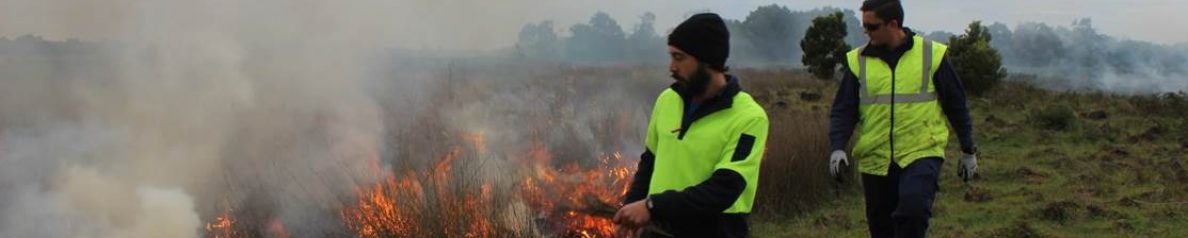
 Fire is a powerful force and a wonderful comfort. Aboriginal people have stories about how fire was brought to people and settler peoples brought their own experience of fire with them.
Kee woorroong Gunditjmara clan (south-west Victoria) tell this story:
A long time ago fire belonged to the crows who lived at Gariwerd, the Grampian Mountains. They were greedy crows and knew that fire was of great value. A little bird, Yuuloinkeear, firetail wren, was watching the crows making fun and games with fire-sticks. One fire-stick fell to the ground and Yuuloinkeear picked it up and flew away. The crows chased him and Yuuloinkeear soon grew tired. So he passed the fire-stick to Tarrakuuk. Tarrakuuk, the kestrel hawk, took the fire-stick from Yuuloinkeear and lit all the Country behind him. From that time there has been fire for all the Gunditjmara.
(Source: Nyernila: Listen Continuously. Aboriginal Creation Stories of Victoria, Creative Victoria website)
We’ll be sharing stories on Saturday 12 August – 4.30-8.30 pm – in the forest and around the fire at the Newstead Railway Arts Hub. Join us! You need to book through Eventbrite so we have enough soup for everyone. Click this link for more information and to book.
 A Talking Fire event at Newstead Words in Winter: Saturday 12 August, 4.20pm – 8.30pm.
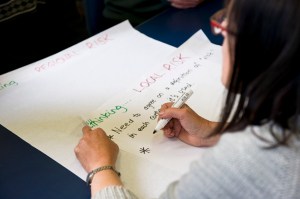 In the last session of Talking Fire, there was a chance to reflect on what we had heard and experienced over two intense days. The big question was: How can we rethink ‘fire’ at a landscape-scale, not just as a threat to a house or a town? And then – So what might we do differently? What have we learnt? What are we puzzled by?
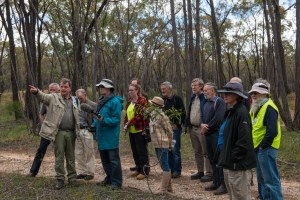
 Day 1 of Talking Fire was a hit – plenty of listening, reflecting, talking, sharing. We learnt that fire isn’t just one thing – every fire is different. Fire shapes ecology and it shapes the stories we tell. Our bush – the Box-Ironbark forest – doesn’t need fire for regeneration, but it can tolerate very occasional fires. We heard about cultural fires, slow trickling fires that are safe fires. And we talked about where risk reduction might be best – public land, private land or a strategic combination. What’s the right path to take?